The Sea of Flags in Kyiv
Kyiv welcomes us.
We drive along the highway from Odessa to Kyiv. After a small rest area, there’s a monument marking the entrance to the city. Nearly every city in the country has several such monuments. But what really catches the eye here is a sort of tank standing between two small stone walls, its barrel pointed directly at oncoming traffic. If you’re driving normally on the six-lane highway, you probably wouldn’t even notice it - or you might mistake the structure for a real tank. In any case, it sends a clear message right away.
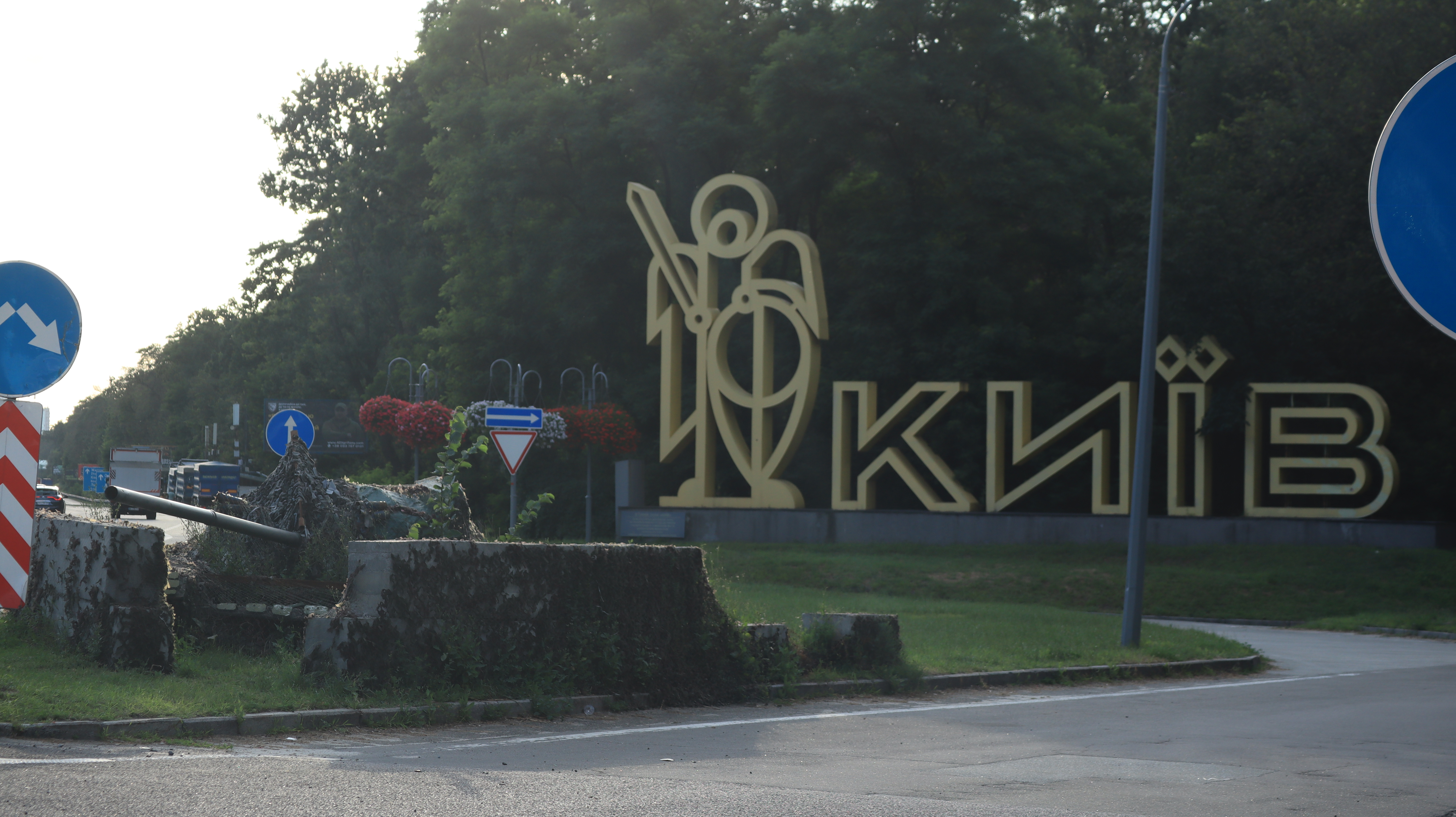
The scene wasn’t really unusual, since we’d already driven past several military checkpoints and been stopped for inspection. Our German license plate had probably caught their attention several times. The soldiers were always quite surprised, but in the end they were happy to see us every time and were extremely friendly toward us. On the way from Odessa to Kyiv, the GPS had been disrupted several times due to airstrikes, which made navigation considerably more difficult at times. More than once, the soldiers at the checkpoints directed us to the right route.
Pedestrian underpasses allow you to walk beneath the six lanes of traffic without having to wait long for a rare (but brief) green light. It’s a concept I wasn’t familiar with at all back home. It’s also very convenient that, for example, at Maidan, these underpasses lead directly to the Globus (a small mall), part of which is underground. If you go even deeper, you’ll reach the metro.
Check in at the Hotel
The last few meters of the drive take us off the main road to the right, over cobblestones, past tank barriers, toward the government district. According to the signs, entry is prohibited, and two police cars parked by the road reinforce that message. Nevertheless, we go ahead anyway, since we’ve learned over the past few years that this is still the correct (and only) way to the Hotel Ukraine. On our first visit, we drove a bit too far, and when we reached the military checkpoint, a soldier appeared next to us (out of nowhere) and told us we should please leave. The police officers are sitting in their cars or standing next to them on the street and barely pay us any attention.
And then we’re standing right in front of the hotel’s stairs, ready to check in. The hotel lobby is opulent and clad in marble. The ceilings are (as is typical for these old Soviet buildings) somewhere between three and five meters high. In the dimly lit area behind the front desk, you can see parts of the ceiling paneling hanging down. The tremors from the explosions over the past few days have left their mark everywhere. All over the city, you keep seeing broken window panes that have been replaced with wood. Just like the last few times, we got a room on the ninth floor with a view of the city to the north, west, and south. We put our suitcases in the room, parked the car in the secure parking lot, and headed straight to the Maidan.
Maidan is centrally located. The six-lane street runs through the square, effectively dividing it into western and eastern sections. But thanks to the underpasses, that’s not a problem. Our hotel is located on the edge of the eastern half. We head toward the street, where life is bustling. There are tons of people milling about here. The stores are bustling, the coffee stands are packed with customers, and the park benches are full of people chatting and enjoying life to the fullest.
The vanished meadow
There’s a patch of grass just off the street. I can’t see the grass this year, but I know from previous years that it’s there. By now, it’s completely covered with flags, pictures, and memorial plaques. At the start of the war, people had begun sticking small Ukrainian flags into the grass here to commemorate their fallen loved ones. In 2023, it covered a few square meters; by 2024, it had grown even larger. Now, there was no trace of the lawn left. Small paths wound through the sea of flags. Seeing just how much bigger everything had become really brought a lump to my throat.
The Shift in Thinking Among MAGA Influencers
Even before we could get a closer look at the sea of flags, we saw a woman speaking to the cameras, followed by a social media team. Interestingly, this, too, is a scene that’s quite common here. Two years ago, we’d seen the ZDF “Heute” TV team here, an Al Jazeera journalist a few hundred meters away, and a Hungarian TV crew at our own hotel. So this wasn’t anything out of the ordinary - That’s what we thought. Alex recognized the woman pretty quickly. It was Laura Loomer, a right-wing MAGA influencer and high on Donald Trumps list. Just two days earlier, we’d read a Spiegel article about her trip to Ukraine, as she was in the midst of a change of mind and had come to realize that Ukraine isn’t full of Nazis, as Russian propaganda claims. The striking featured image of her at McDonald’s with burned-out buildings in the background was still fresh in our minds. She was still filming some videos, but we wanted to talk to her and encourage her to continue supporting Ukraine. We took a look at the flags and pictures of the fallen soldiers. It’s truly heartbreaking to see how many soldiers there are now. Every time I saw that the fallen soldiers were five years younger than I am, I felt even worse. It was a feeling that came up frequently on this trip.
I had lost sight of Laura Loomer and Alex. I walked around the sea of flags and didn’t see anyone. The signs and flags were so close together that you couldn’t even see through them. So I walked through the sea of flags. It took me four minutes to find Alex. He was still talking to Laura Loomer’s cameraman. When I joined them, the atmosphere between the two of them was very friendly. He even asked where we were from and said he thought it was really cool that we were there from Germany. But maybe that was just American politeness. Alex had struck up a conversation with him after he went over to Laura Loomer and told her:
Send the fucking missiles!
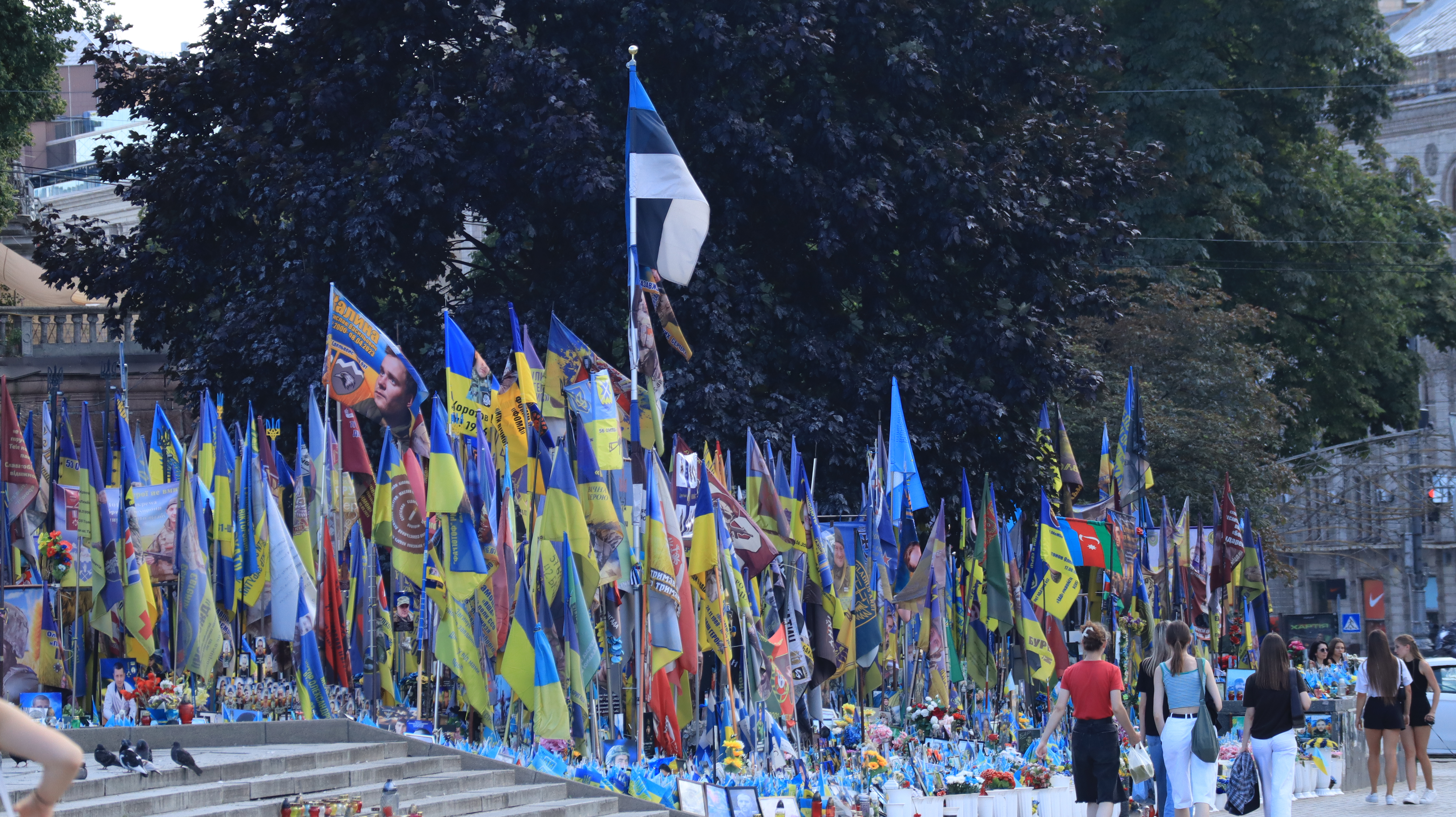
That seemed to have irritated her a little. Alex then repeated the sentence a bit more politely, and she understood. There wasn’t really a deep conversation, but she got the point. After exchanging a few pleasantries, she left with her team. They said goodbye to us and were gone. We stayed in the sea of flags for a few more minutes. The sheer number of them demanded that we stay out of respect and look at the pictures of the fallen. It would have been disrespectful to take photos there from within the crowd, so I refrained from doing so. Later, I took one from a distance. It was particularly striking that not only Ukrainian flags were hanging there, but also those of the respective volunteers. There was a section dedicated to Lithuanian fallen soldiers, some with photos from the trenches, and a small section for American volunteers. The mood there didn’t improve; if anything, it made your stomach churn.
No panic despite the Air raid sirens
Later, as we walked on to get something to eat, I saw someone kneel down in front of the flags and start to pray - it was very moving. All around, passersby were walking by, going about their daily lives. As an outsider, that’s hard to grasp at first. How can people here just go about their lives as if nothing were happening? Over time, though, you come to realize the obvious: These people have no other choice. You can’t live in a state of emergency for over four years. When rockets strike, of course everyone runs for cover and into the metro, if possible. But a simple air raid alarm doesn’t cause people to start running around in panic. Our (as in Germans) image of air raid alarms is heavily shaped by stories from World War II. But that’s not how it is here. The air raid alarm goes off, sirens blare everywhere, and cell phones emit shrill sounds. But people just carry on as usual. This stark contrast has really stuck with me.